Pompano Beach Airpark (PMP, ICAO KPMP) is a city-owned, public-use general aviation airport about a mile northeast of Pompano Beach's downtown and roughly 8 miles north of downtown Fort Lauderdale. It shares a fence line with Palm Aire, which makes it a real part of the neighborhood's identity, and it is a genuinely unusual amenity for a residential market: a working airport with three runways, a control tower, and federal money flowing in.
What it is
The field began during World War II as a satellite training field for Naval Air Station Fort Lauderdale. The City of Pompano Beach acquired it on August 29, 1947 under the Surplus Property Act and restricted it to general aviation, renaming it Pompano Beach Air Park. The FAA classifies it as a general aviation reliever airport.
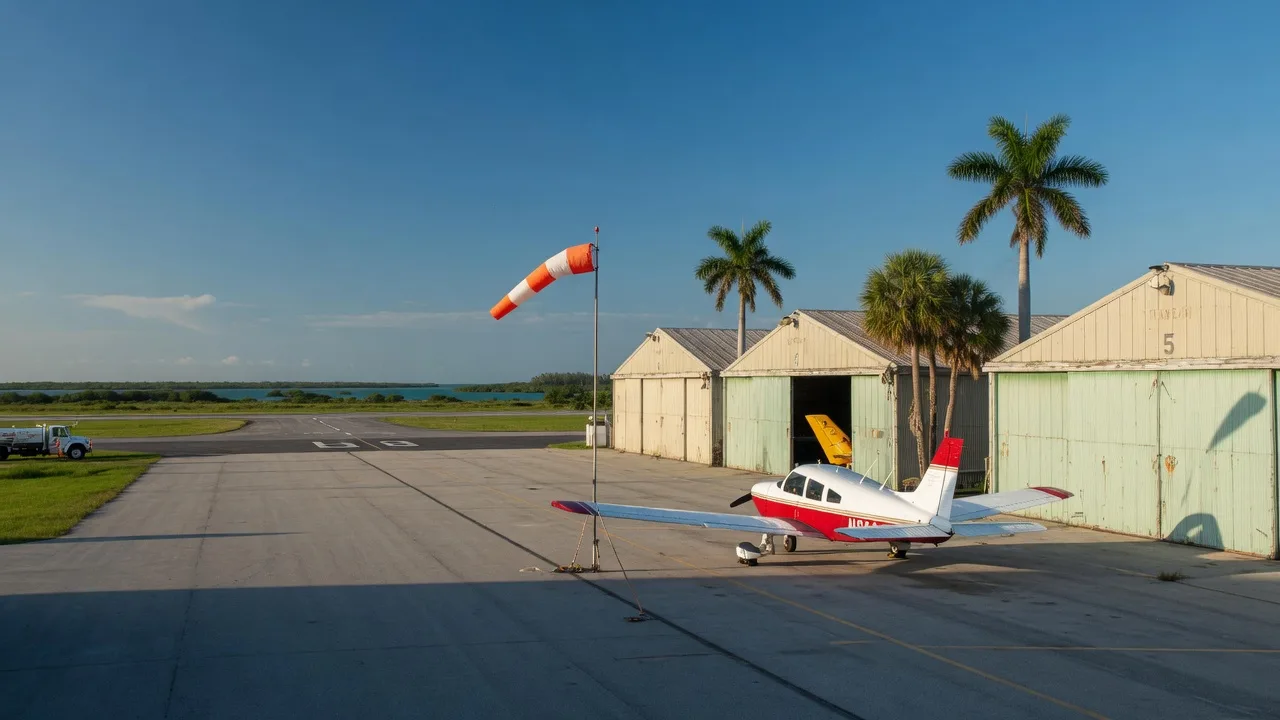
The field
The airpark has three intersecting asphalt runways: 15/33 at 4,918 feet, the longest; 6/24 at 4,001 feet; and 10/28 at 3,502 feet. The city shortened Runway 15/33 in 1971 to limit operations, then later extended it back to its current 4,918 feet. Field elevation is about 19 feet.
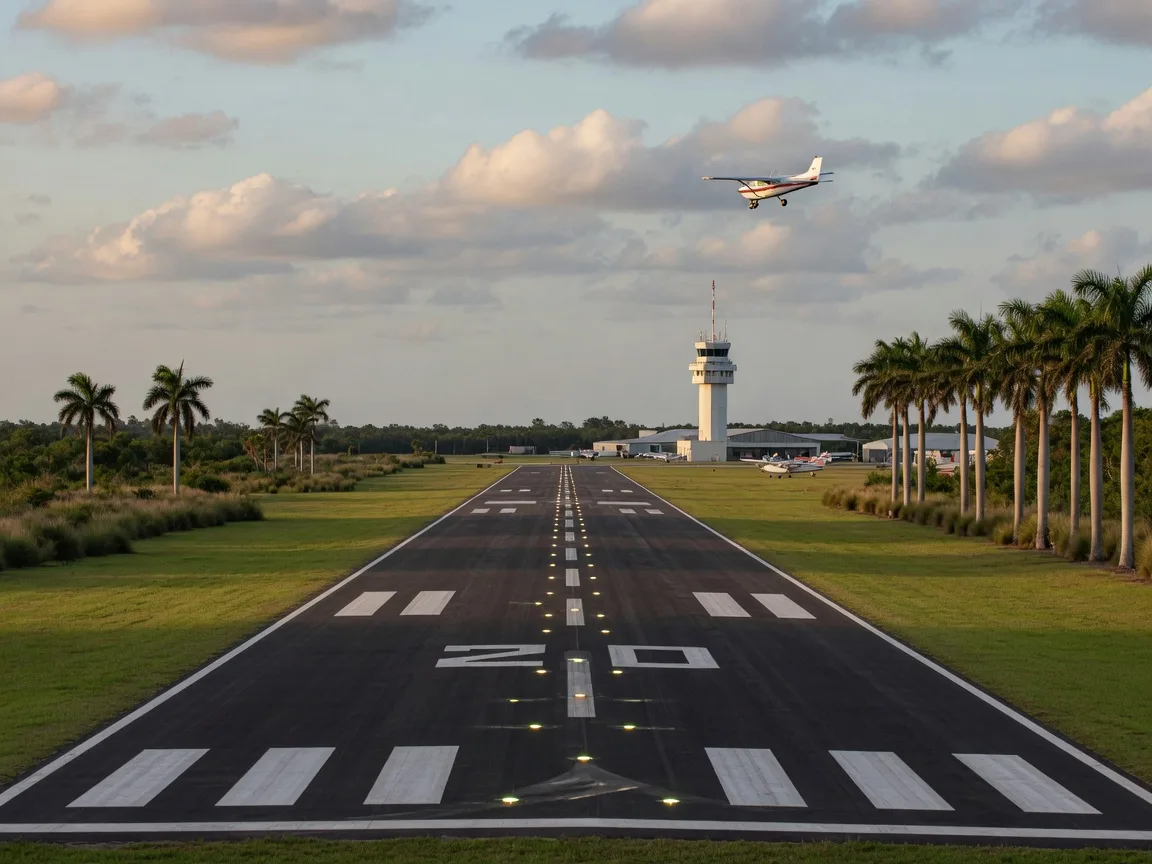
How busy it is
The airpark has had an FAA contract tower since 1996, operating roughly 7:00 AM to 9:00 PM daily, with Class D airspace in those hours and Class G otherwise. It handles roughly 170,000 aircraft operations a year, and flight training accounts for 75 to 80 percent of that traffic. It is the home base of the Goodyear Blimp, hosts two FBOs, Sheltair Aviation and Pompano Aviation, and has roughly 131 to 158 based aircraft, with maintenance, avionics, charter, and flight-training tenants on the field.
The investment
The airport is being upgraded, not wound down. In FY2026, the FAA recommended a $950,000 award to fund design of a replacement contract tower, correcting line-of-sight issues and enhancing air traffic safety, and the city received a $950,000 federal design grant for a new control tower. On the runways, FAA AIP grants brought $647,612 in August 2024 and $5,174,899 in July 2025, both for runway and runway-lighting rehabilitation. The city also runs a Quiet Flying program and master plan for the airpark, an active effort to manage the field's relationship with the community around it.
What it means for living there
Honest notes: flight training means daytime traffic overhead, and the tower hours mean most activity falls in daylight hours. The city's Quiet Flying program exists precisely because the airport and the neighborhood share a fence line, and anyone buying nearby should spend time on the ground to get a feel for the pattern.
For aviation-minded buyers, a general aviation airport with three runways, a contract tower, two FBOs, and a new tower on the books is a real amenity, and it is about 10 minutes from the beach. For everyone else, it is part of the neighborhood's identity: the blimp overhead, the trainers in the pattern, and the low hum of an active field beside the fairways. It is one more way Palm Aire is not just a golf community, it is a place with its own working infrastructure right at the edge of the redevelopment story.
Sources
- City of Pompano Beach · Air Park: Quiet Flying, Master Plan and History
- AirNav · KPMP Pompano Beach Airpark
- FAA · FY2026 Contract Tower Program Recommended Selections (May 15, 2026)
- FAA · AIP grants announced August 9, 2024
- FAA · AIP grants announced July 11, 2025
- FDOT · Airport Profile: Pompano Beach Airpark (April 2024)
By
Ryan Parker · Realtor, Coldwell Banker Realty
Sales Associate · SL3571861 · Florida. Co-listed with Helen Katz. 2026-10-14 · Airport operations, grants, and tower plans change; confirm current status with the city and the FAA before acting on them.